What you'll learn
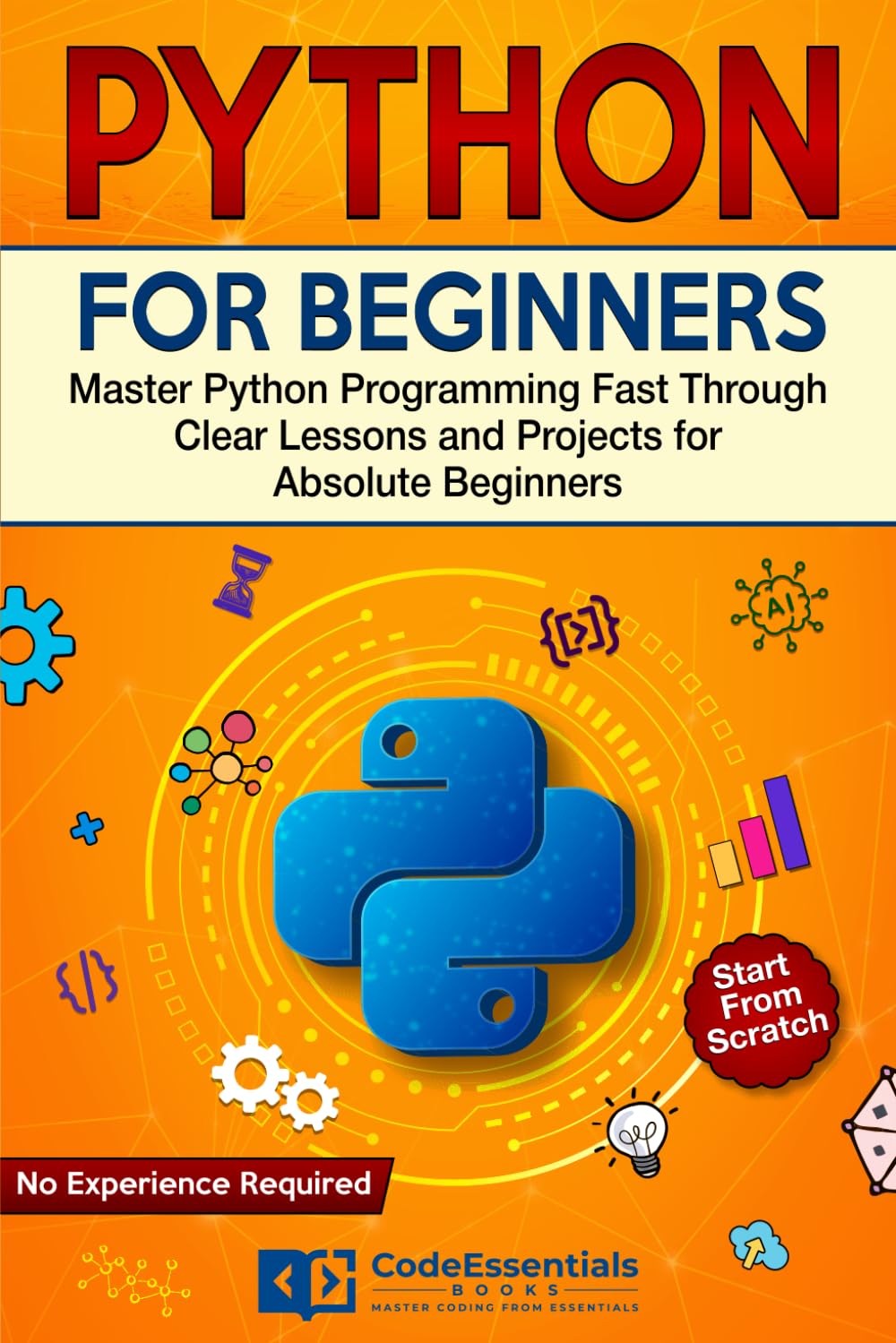
- Start coding in Python from zero — no prior experience needed
- Follow clear, jargon-free lessons that build your skills step by step
- Practice with mini projects and real coding exercises
- Understand the logic behind the code, not just the syntax
- Move forward whether you're a student, a career changer, or just curious about tech
Python is the world's most popular programming language for beginners — and this hands-on guide makes learning it genuinely enjoyable. Easy-to-follow lessons, engaging explanations, and mini projects take you from your very first line of code to writing real programs yourself.
What's in the free Practice Toolkit
Graded exercises with answers
Five exercises for every part of the book — from your first print() to classes, files, and full mini programs — each graded by difficulty, with compact reference solutions included.
Day study plan
A day-by-day calendar that pairs each part of the book with its exercises: one focused hour a day from installing Python to building your first solo programs.
Common-mistakes checklist
Nine out of ten beginner errors on a single page: indentation, missing colons, = vs ==, input() giving you text, off-by-one ranges — run through it before you start doubting yourself.
Send me the toolkit
Enter your email and we'll send the PDF straight to your inbox.
You're in — check your inbox 📬
We've sent the toolkit straight to your inbox. (Don't see it? Check your spam or Promotions folder.) Or grab it right here:
You're already on the list ✅
No confirmation needed — we've re-sent the toolkit to your inbox. (Don't see it? Check your spam or Promotions folder.) Or grab it right here:
We'll send the toolkit plus a short series of practical Python tips. Unsubscribe anytime with one click. We never share your email.
Questions readers ask
Do I need any programming background?
None. The book starts with installing Python and running one line of code, and every concept afterwards arrives with a worked example whose output you can compare against your own screen.
What projects will I build?
Small, complete ones you can finish in a sitting — a number guessing game, a calculator, and rock-paper-scissors among them — chosen because each forces you to combine several ideas rather than practise one in isolation.
What is in the free Practice Toolkit?
Graded exercises with worked answers, a day-by-day study plan, and a common-mistakes checklist covering the errors that stop beginners for hours: indentation, off-by-one loops, and confusing a string with a number.
Which version of Python does the book use?
Python 3, installed from python.org. Everything in the book runs on any Python 3 release from the last several years, so a newer point release will not break the examples.
More from CodeEssentials Books
Every title is written the same way: plain language, real examples, and a free companion toolkit. See the whole catalogue.